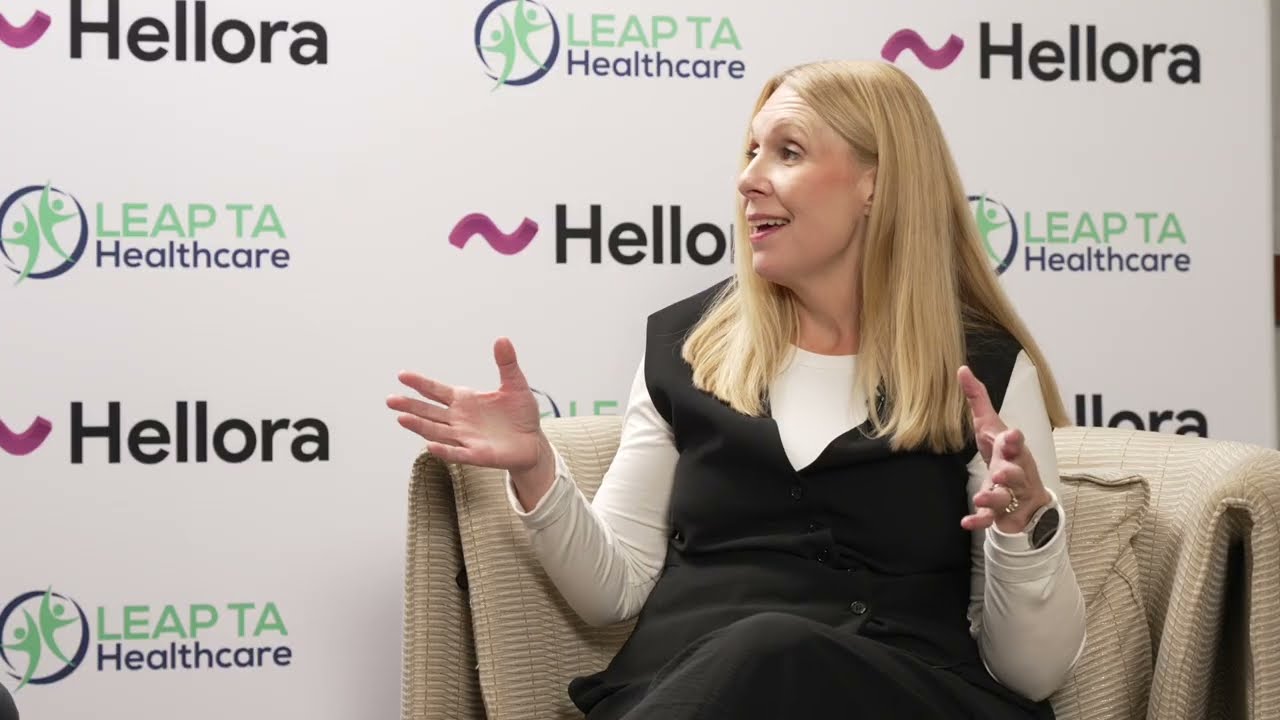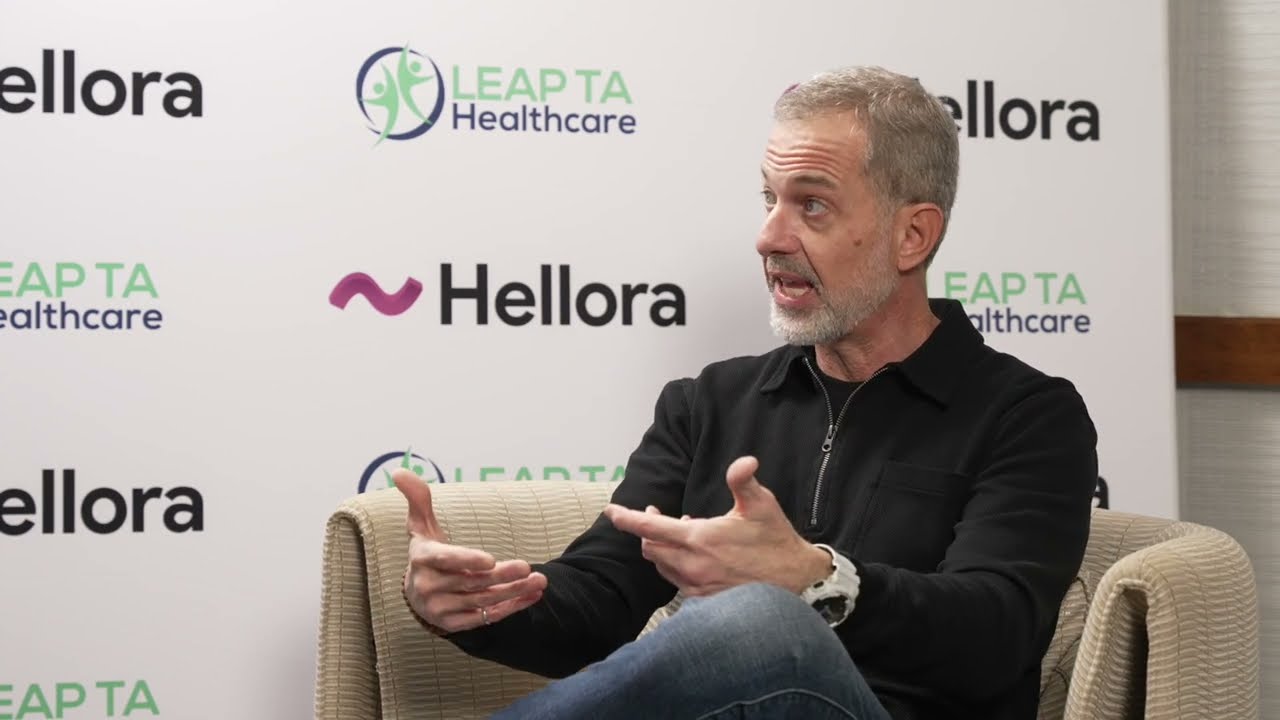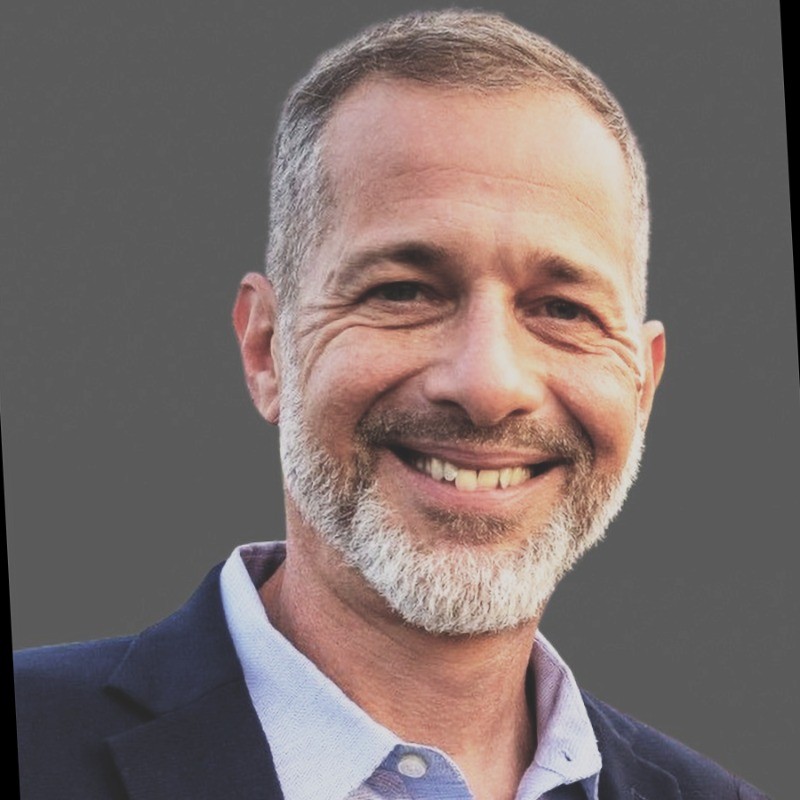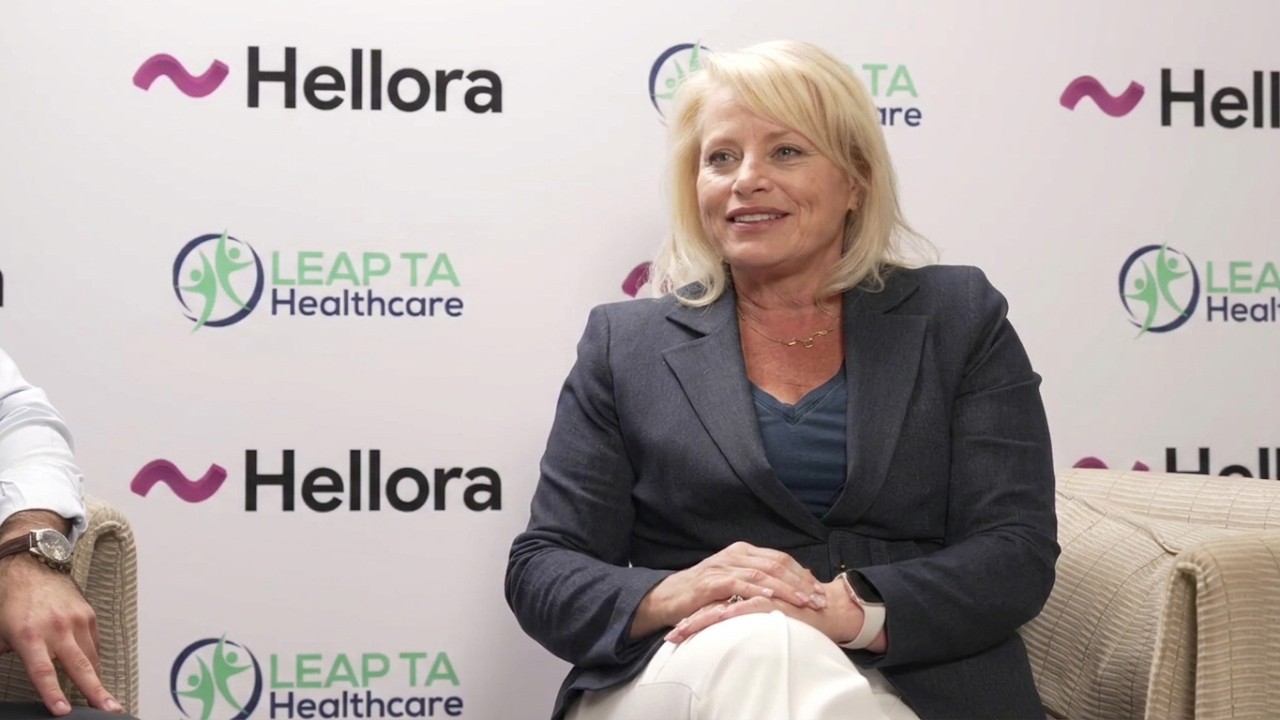
Tawfiq: Hi everyone, I'm Tawfiq, co-founder and CEO here at Hellora. We're at the LEAP TA Healthcare Conference, and I'm with Jeannette Pugh from Cedars-Sinai. Hi, Jeannette.
Jeannette: Hi, Tawfiq. How are you?
Tawfiq: I'm doing great. Jeannette, you spoke at the conference about using video to humanize the way you attract talent. Tell us more about that.
Jeannette: We recognize that everything is shifting toward AI, but we wanted to take an intentional approach and not go to the extreme of using AI for everything in the interview process. What I spoke about, along with my colleagues and collaborators, was a pilot at Cedars-Sinai that gave hiring managers a direct voice. They recorded videos about their jobs and told candidates about the role before the first interview. Candidates could hear directly from their potential boss what it would be like to work for them, what the role involves, and what the expectations are. Then candidates could decide whether they wanted to keep investing time in the interview process.
Tawfiq: Were you putting the videos on the job descriptions before people applied, or sending them to candidates after they applied? Where did you place them in the journey?
Jeannette: It's actually how we announce the job. Most people are strapped for time, and especially in the age of social media, who's reading job descriptions anymore? These videos became a way to personalize the experience. Even before a candidate applies, they can click on a job announcement, which is essentially a recording of the hiring leader, or even the hiring team, sharing some insight about the role before the candidate decides whether to apply.
Tawfiq: So job descriptions have been text since the newspaper days, and you're saying, there's TikTok now, there's Instagram, consumption is video. So you announce the job in video format and give insight into the role and the leader, which humanizes the brand.
Jeannette: Yes. It takes me, as the executive recruiter, out of the intermediary role and connects the hiring leader directly with a potential candidate.
Tawfiq: You lead executive search at Cedars-Sinai. What makes executive search different from non-executive search in healthcare?
Jeannette: Thank you for that question. I feel it's an honor to hire the leaders of Cedars-Sinai. With executive search, we're often dealing with C-suite-level positions, so we want to spend the appropriate amount of time investing in the relationship and target people we want with us for a long time. Leaders set the tone and the culture of an organization, so we spend more time truly assessing those candidates. Executive roles tend to take a bit longer because of that. We want to get the right person who will set the tone for leadership throughout the organization.
Tawfiq: It trickles down: you hire a great leader, they hire a great team, and you get a great culture. I'm sure many of the people you hire aren't applying for the job. It's a lot of sourcing and relationship-building, where maybe it's a not yet. Operationally, how do you keep people warm, so when a chief nursing officer role opens up, you already have 10 people you can reach out to?
Jeannette: All of it is about building relationships. That means coming to conferences like this and becoming known and approachable in various circles, so people know to call Jeannette if they're interested in a leadership role at Cedars-Sinai. As you mentioned, most of these roles involve passive candidates. They're generally happy where they are, and we want them to know about the great opportunities at Cedars. Whether they're interested now or want to consider it in the future, we want them to know whom to contact.
Tawfiq: Once someone says they're interested, how long does it usually take to get them to a signed offer letter?
Jeannette: It varies depending on how fast we can move on certain roles. If the relationship has already been nurtured over years, the person may already be known to many of the colleagues making the placement decision. But on average, I'd say industry benchmarks are in the three-to-six-month range for most executive roles, and a bit longer for some specialty positions.
Tawfiq: I'm sure many of these roles depend on referrals: an executive at the organization knows someone, or a philanthropist knows someone. How much do you lean on referrals?
Jeannette: We love referrals. Building on the importance of relationships, it means the person has already had some vetting, because they know some of our very hardworking staff. We also nurture our database. Once someone applies to Cedars-Sinai, they stay in our applicant tracking system, and we keep going back to that database. Beyond that, if a relative of our CEO applies, I want to give that person special attention, and it's the same level of attention for any referral that comes through.
Tawfiq: You made a good point: people who apply stay in your database, and you can go back and ask who you've spoken with in the past who could fit this role. How important is that, and how often do you do it?
Jeannette: We're getting to the point where we can use technology to go back and look at our applicant pool for every opening. And in my role, some names come through constantly. People frequently send me notes about their continued interest in roles at Cedars-Sinai. Those relationships have been built over my years in this position, and people know they can reach out to me.
Tawfiq: Final question. What's one key takeaway from this conference that you want to go back and focus on, maybe in 2027?
Jeannette: That's a great question. This is my second year at the LEAP TA conference. Last year I was very impressed, clearly, since I'm back, by the chance to share best practices with colleagues. That's one of the best takeaways. I was so blown away by the knowledge being shared last year that I said, I'd be interested in being a speaker and sharing some of my insight, and I'm grateful I got to do that this year. For anyone considering it, the benefit of brainstorming your current challenges with such insightful colleagues in healthcare talent acquisition is invaluable. Taking time away from your day-to-day work and looking at challenges through a different lens is just priceless.
Tawfiq: And making new friends. Am I considered a friend?
Jeannette: Absolutely.
Tawfiq: Jeannette, it's been a pleasure. Thank you for joining us and sharing your knowledge.
Jeannette: Thank you.