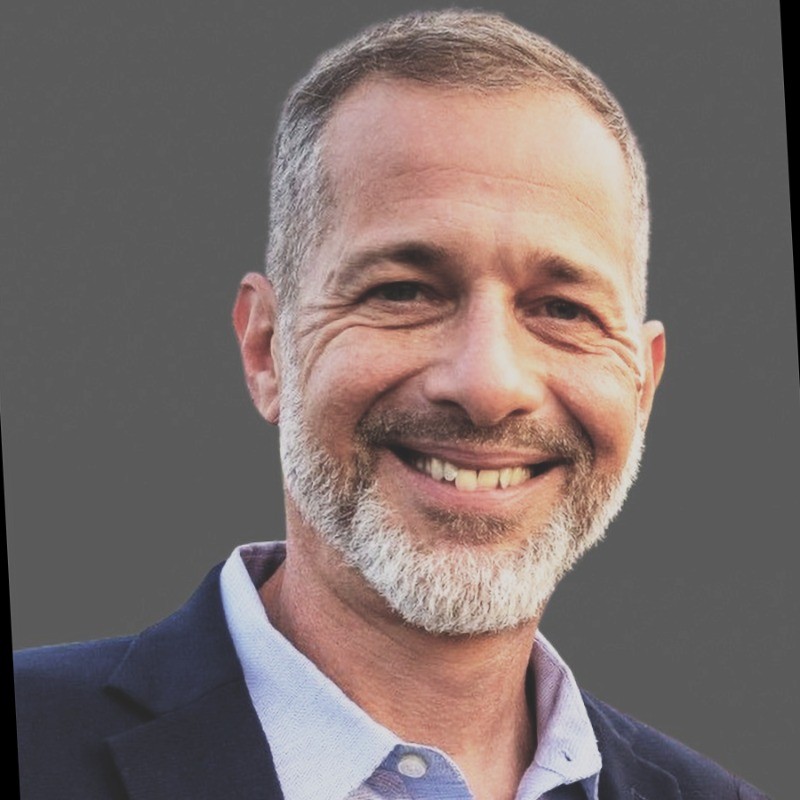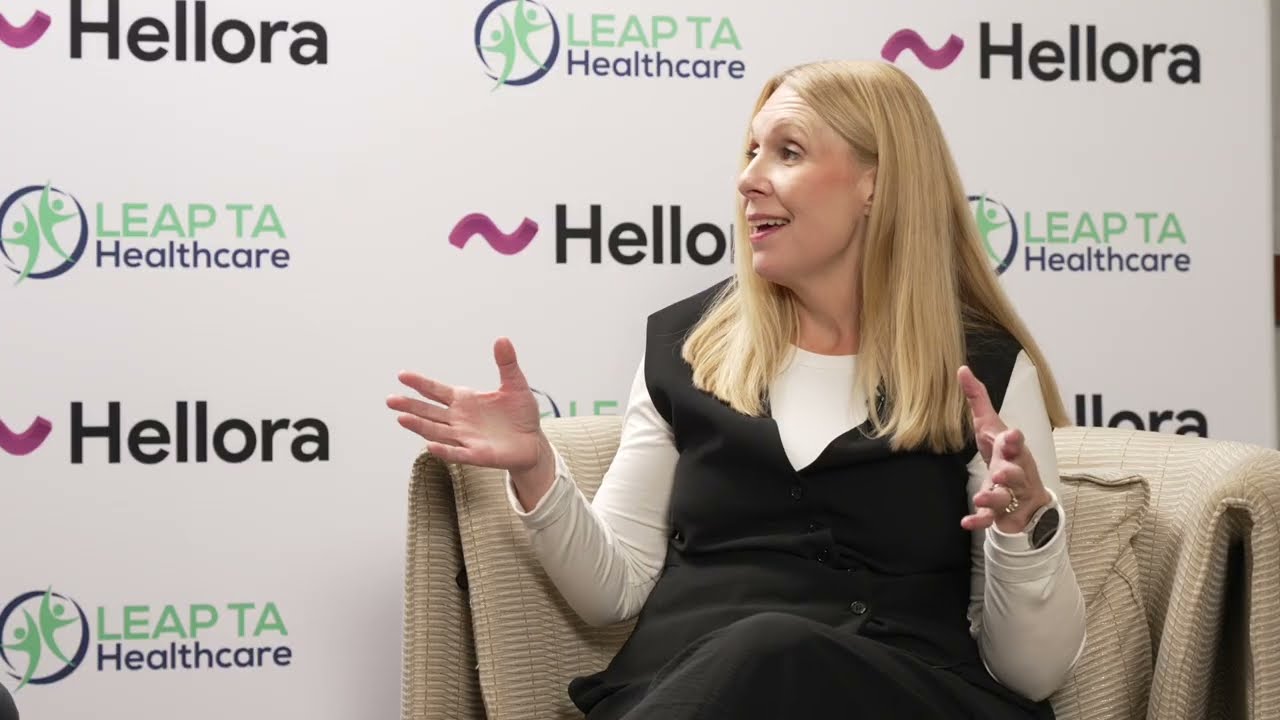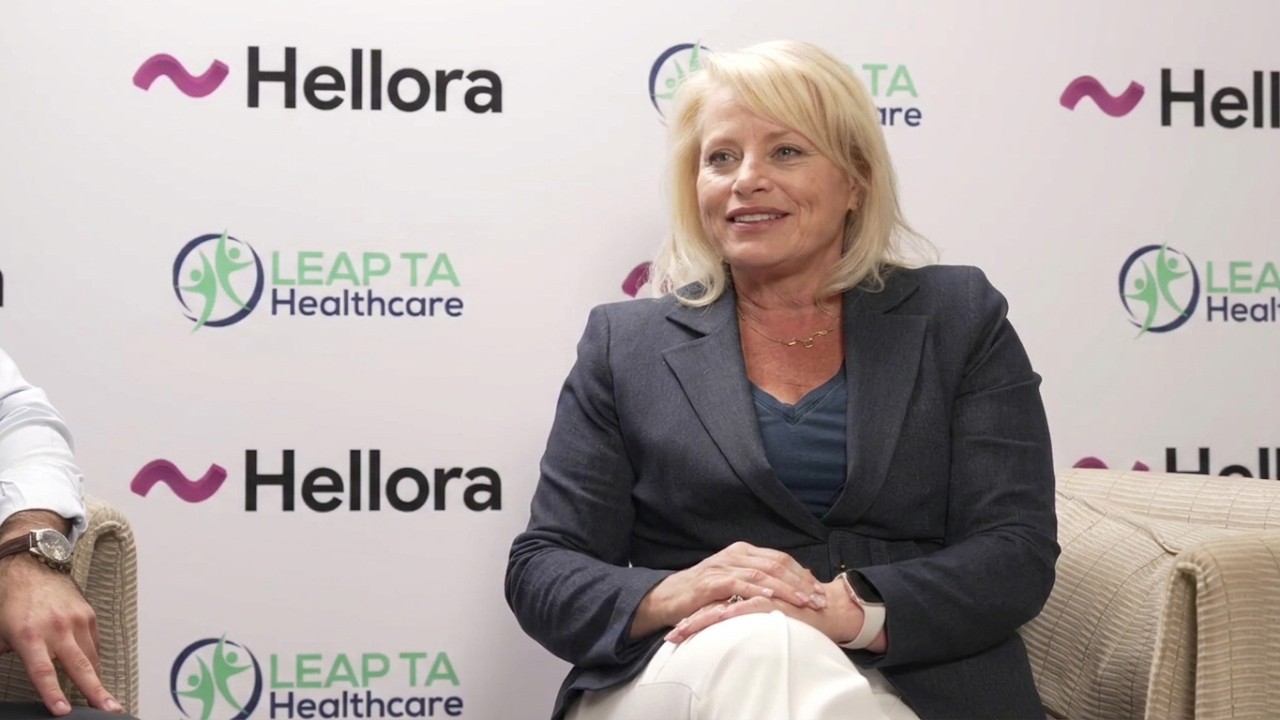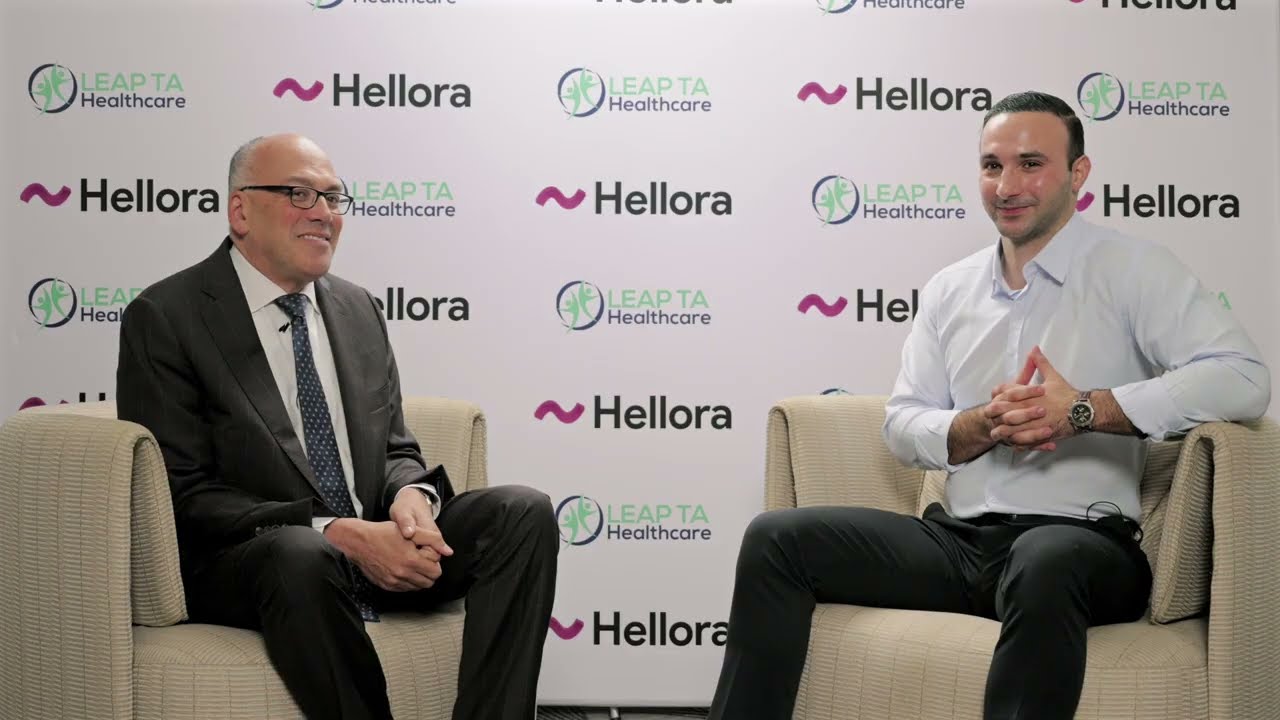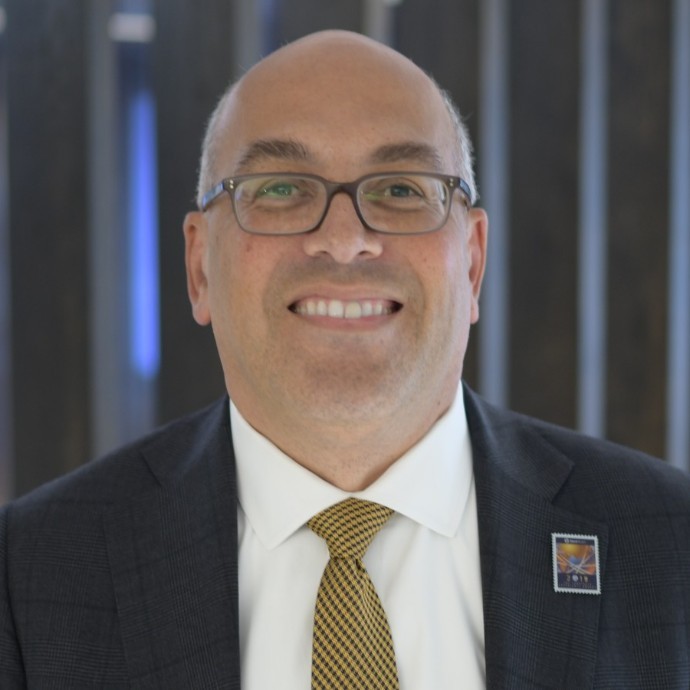
Tawfiq: Hi everyone, I'm Tawfiq, co-founder and CEO here at Hellora. We're at the LEAP TA Healthcare Conference, and I'm here with Luigi Lupo from Hackensack Meridian Health. Luigi, thank you for joining us.
Luigi: Thank you, Tawfiq. Thank you for the opportunity.
Tawfiq: Luigi, you spoke at the conference today about talent share market maps. Tell us more about your session.
Luigi: It was a relatively simple concept, until we brought it to fruition. The challenge was: when we advertise, do we actually know whether the people we're targeting are seeing our ads? That was the beginning. What we did was use the state registries for licenses and certifications to literally map out the talent landscape in New Jersey.
Tawfiq: So if I hear you correctly, in a given area there are, say, 10 nurses. Do you know how many of those 10 you already employ and how many you don't?
Luigi: That developed as the concept evolved. Originally it was just a New Jersey map. I knew, for example, that 791 nurses live in Jackson Township. So if I wanted to target Jackson Township, I could advertise to those 791 specifically, because I had their contact information.
Luigi: What I didn't realize is that I was also targeting my own team members. That created a bit of a stir, as you can imagine, and it almost took the steam out of the initiative, because it caused some confusion. The common denominator we identified was comparing the source data from the state registries with our team member data. Now we can overlay it, and in my campaigns I can exclude my team members and target the rest of the market that we don't yet employ.
Tawfiq: And it helped you decide which markets to go after. In some markets you employ only 20% of what's available, so you spend more there, while in others you already have 90 or 95% of the workforce, so why spend so much to get the last 5%?
Luigi: Exactly right. Once we mapped it out and identified the commutable areas for each of our acute care campuses, we could see that in Jackson we have 20% market share, but in another area we only have 10%. So we became very strategic about our advertising and about where to spend our dollars.
Tawfiq: In markets where you already employ most of the people but still need more talent, how do you get more?
Luigi: At the moment, we can only work with the RNs currently living in New Jersey, and I have them mapped out. But I think not only Hackensack Meridian Health, but healthcare organizations in general, will get to a point where they exhaust their state's talent and have to look outside the state. That's where we're heading in the next stage of our strategy: mapping the RN landscape in what we call compact states and starting to target there as well.
Tawfiq: New Jersey isn't the easiest healthcare landscape. There's a lot of competition for the same talent. You mentioned marketing out of state. Do you see that happening in partnership with competitors, saying, we're all in this together, let's bring more people into New Jersey and let them choose the best employer?
Luigi: I think that's an incredible concept, and companies will almost need to do it out of necessity to a certain degree. It depends on the pockets we're looking for. For example, I could see a collaboration with Hackensack's number one competitor, which would be RWJ, on certain initiatives, maybe for niches like the ER and ICU. Those are really difficult areas where you need experienced RNs, and that's what we're lacking.
Tawfiq: So it becomes a state-level marketplace, with states competing to bring talent in, similar to tourism campaigns like Visit Texas or Visit California. We're expected to face a shortage of 500,000 nurses by 2037, and other roles too. Even if states take talent from each other, some states will still be short. What's the solution? How do we get more talent into the workforce?
Luigi: I think it boils down to giving our existing team members the opportunity to train up. I don't know if there will ever be a silver bullet for these challenges. It will be a combination of ideas and initiatives. But we may get to a point where we need to develop and grow our own, for lack of a better term. We're already starting to look at that on the allied side. We have what we call Hackensack affiliate-level school relationships, where the program administrators are actually Hackensack employees. We have three affiliate-level partnerships on the nursing side, and we need to start developing that on the allied side. To answer your question directly, I think we have to explore options like this in the middle of a shortage.
Tawfiq: It happened in tech a while back. There was a shortage of software engineers, and companies moved from requiring a computer science degree to accepting eight-to-12-week boot camps in partnership with companies like Amazon and Google, with a job at the end. Do you see a model like that for degree-based roles like nursing, where the state or government creates a compact degree because we need people quickly?
Luigi: I think everything is worth exploring, and the tighter the market gets, the more it's worth exploring. We're all going to compete for talent, and competition for RNs specifically will get hotter and hotter. But in my opinion, the days of just throwing money at the problem are over. If we can cultivate an environment that employees want to be part of, that's the win. Throwing money at the problem is the traditional solution, and of course it works. But if you can demonstrate your culture and attract people who just want to be part of it, that might be a hidden win.
Tawfiq: In your session, you spoke about texting. There's a lot of competition in New Jersey, and the same candidate is getting 100 messages and 100 emails from different employers. Beyond messaging, what are you doing to stand out?
Luigi: Because of the heat maps and our market share data, I can see where competition is tough. Using Jackson Township in Ocean County as the example again, if we're facing a lot of competition there, maybe we need to hold an event and have a bigger presence, which means getting in front of that candidate population. The maps let us see those pockets, and that adds to the strategy. Texting, for us, is a way to get to the conversation quicker. It's not a replacement for the conversation, and that's a big piece of it. We don't want to use technology to avoid the conversation. Our goal is to use texting and any AI tools coming out to get two humans talking faster.
Tawfiq: Last two questions. You get a lot of applicants, and some get hired while others don't. How important is it to maintain relationships with the ones who aren't hired? And how do you make sure your team looks at your database first when a req opens, before spending on outside sources?
Luigi: There are a variety of reasons a candidate may not be selected. At first glance, maybe it wasn't the right time, place, or position. At Hackensack, we're big believers in what I call market reverberation. If you have a great experience at a Target, a dealership, or a restaurant, you naturally tell 10 people about it. It's called the rule of 10. If you don't get the job at Hackensack but you stay in our database, keep getting messages, and we keep you warm for the right opportunity, your experience is different. The rule of 10 tells us you'll share a good or bad experience with 10 people. If we treat that person right, they'll tell 10 people, and I'll have 10 more applicants.
Tawfiq: So candidates who aren't hired still have an amazing experience and tell others: the interview was great, the hiring manager was engaged, I'm watching their career page, and I'm on a recruiter's warm list, so someone will reach out if another opportunity opens.
Tawfiq: Last question. What's your key takeaway from the LEAP TA Healthcare conference?
Luigi: This is my third year, and I think it's a great conference. What I like most is that it's very focused on TA in healthcare. What I try to get out of this or any conference is validation. Are we doing the right things at HMH? Are we thinking about the right things? What are other companies in our space doing? This is a great forum because practitioners share what they're doing in their organizations, what's working and what's not. For us, it's either, okay, we're on the right track, or maybe we should start thinking about something different. That's how I take advantage of these conferences.
Tawfiq: Luigi, thanks for joining us.
Luigi: Thank you. It was a pleasure.