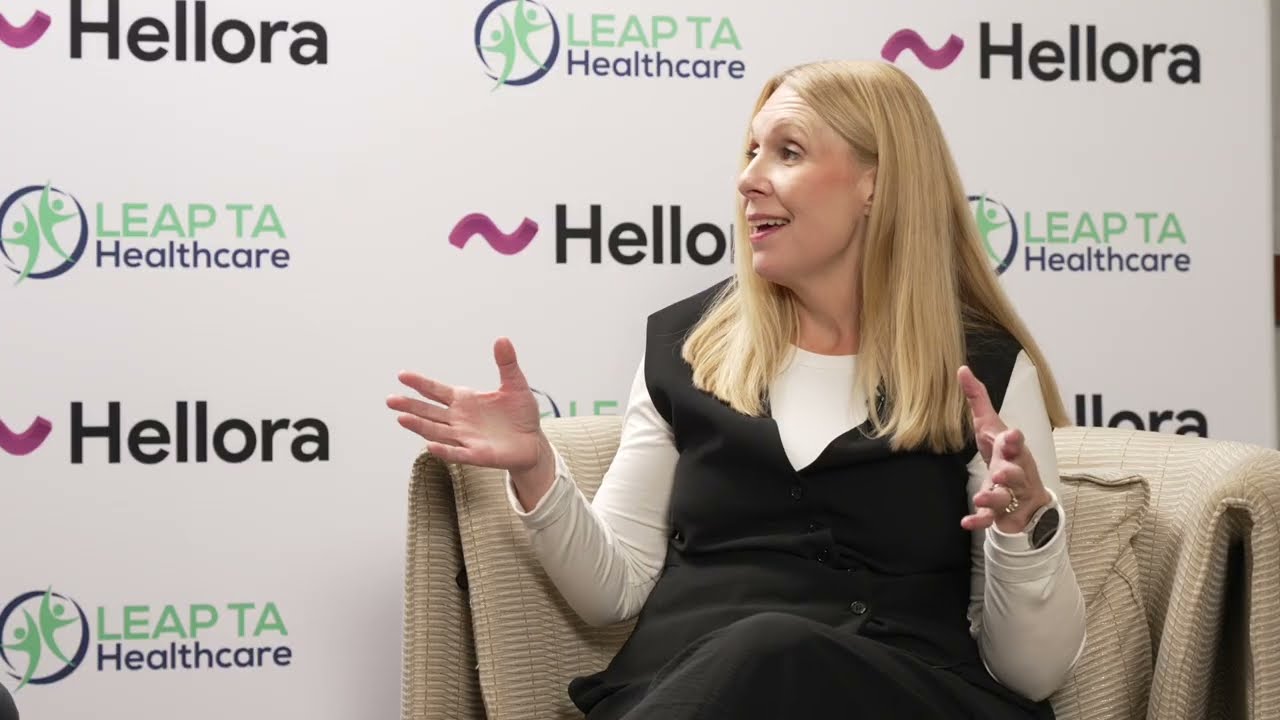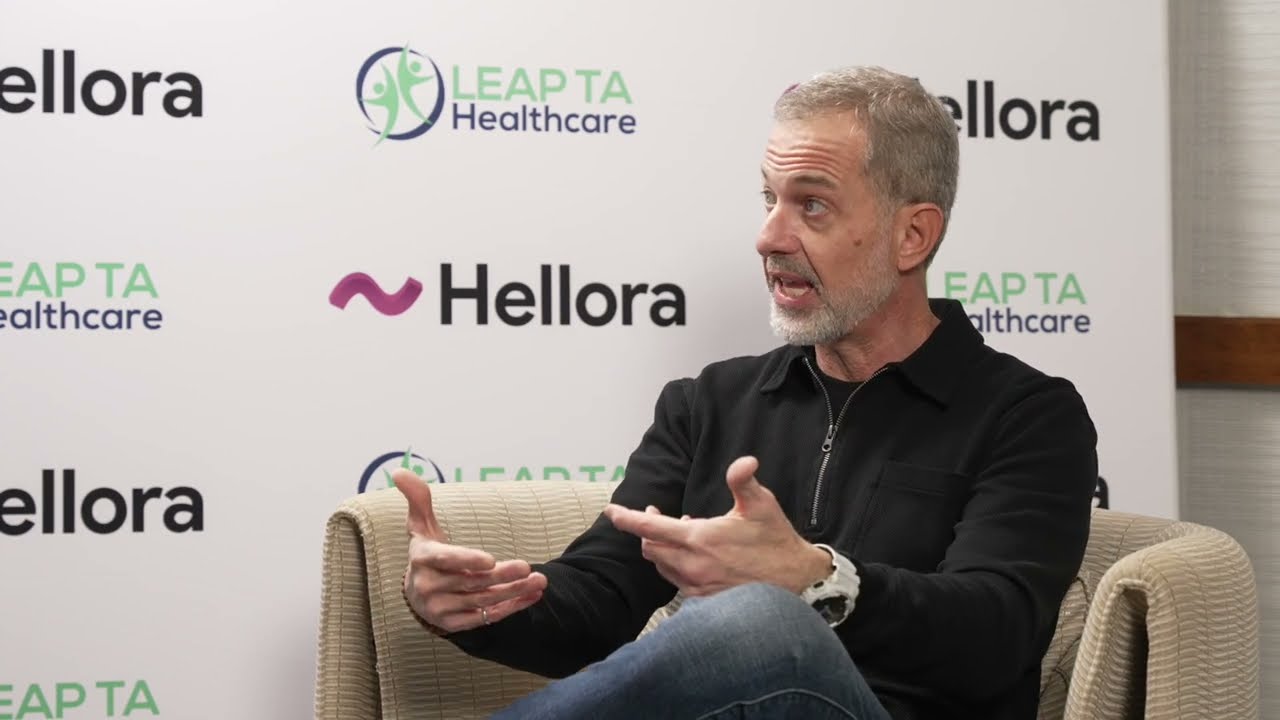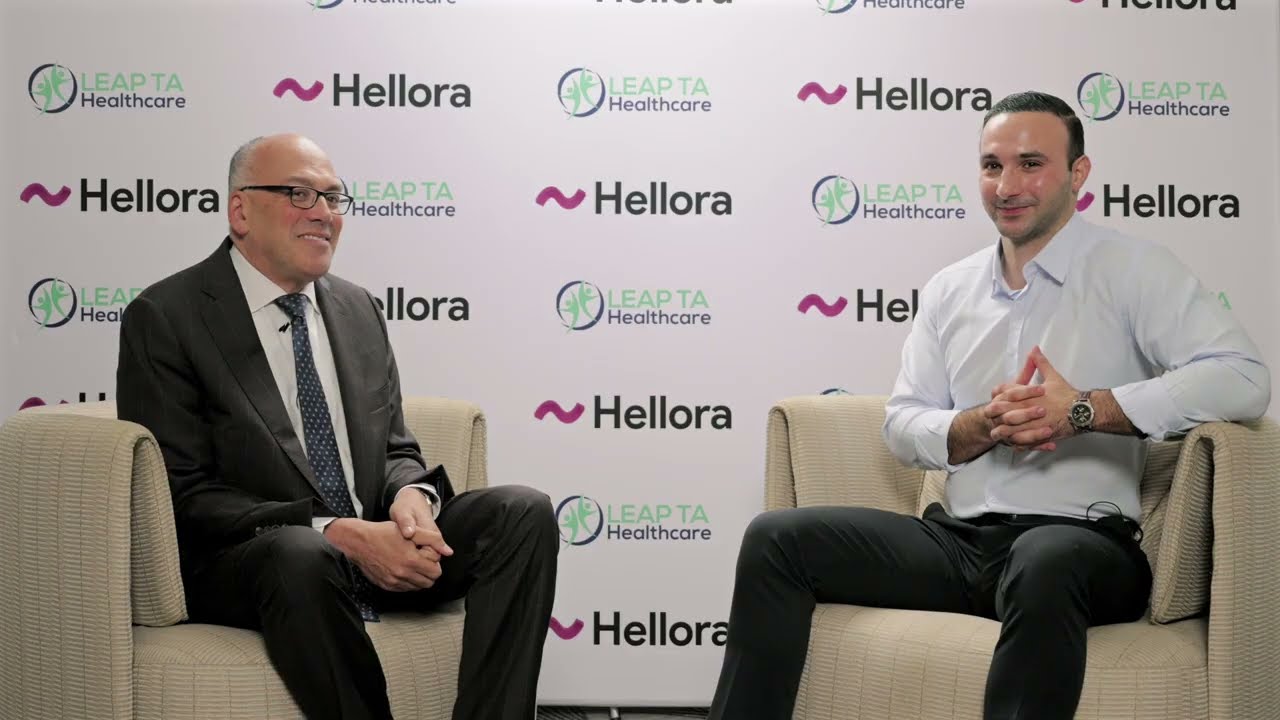
Tawfiq: Hi everyone, I'm Tawfiq, co-founder and CEO at Hellora. We're here at the LEAP TA Healthcare Conference, and I'm here with Lisa Kraska from US Acute Care Solutions. Lisa, thanks for joining us.
Lisa: Thank you for having me. I'm delighted to be here.
Tawfiq: We're delighted to have you. Lisa, you spoke at the conference about having a future-ready TA team, equipping them with the right tools and knowledge to hire the best people out there. Tell us more about your session.
Lisa: I think I was one of the first speakers today not to talk about AI, so I wasn't sure how it would go. But there was a lot of interest in how you make the right investments in your team so they have the skills to deliver and create the experience. The message was: when you implement AI, you automate your processes and workflows. What's left is the human component: the experience recruiters create, the trust they have with candidates and hiring managers, and their judgment in creating a great process and prioritizing their work. I've only been with the company for eight months, and one of the first things we did was recognize that the team deserved that kind of programmatic investment in their professional development.
Tawfiq: Congrats on the new role. Coming in, you take a bird's-eye view and there's a lot to do. How did you know where to start?
Lisa: In my first two weeks, I had 50 meetings, one-on-ones with the company's leadership team. It started with the executive leaders at the top of the house and went all the way down to regional leaders. I did a huge intake: How are we doing? What's the impact of our processes? How is our team performing? What do I need to be thinking about? I also met with my colleagues in the corporate functions outside the clinical organization, which we call the MSO, to talk about partnership and solutions. Then I shifted to the team. We have nearly 50 people, and I spent one-on-one time with every person after those first two to three weeks. From there, we built a big priority list and focused it based on the executive team's input.
Tawfiq: I like that. You listened first instead of coming in and saying, I'm the expert, listen to me.
Lisa: When I joined, a consultant had come in with a list of recommendations, and I thought, I'm not so sure. I need more data. I need to do an assessment myself. I'm not partial to action before knowledge, unless it's necessary.
Tawfiq: You've worked at health systems where you hired both physicians and non-physicians. At US Acute Care Solutions, you focus on physician and APP hiring. How does that differ?
Lisa: In a health system, provider recruiting, both physician and APP, was always very separate from nurse recruiting, allied recruiting, support staff, and corporate recruiting. It was treated very differently, and that put a lot of pressure on the recruiting team to deliver for nursing. Nursing is critical path to patient care in a system, so it gets a lot of money, time, and attention, unless the nursing team feels there's a gap on the allied side.
An organization like US Acute Care Solutions is completely focused on what our providers need to perform at the top of their license, surrounded by quality. Our sales process is incredible, and by sales I mean recruiting. We spend a ton of time with these people over a multi-year relationship to build trust and transparency. We also pour into their professional skills so they can join us knowing we're clinician-centric in every way. We want them to be successful, and we want to protect them from getting sued. It's kind of scary out there when you're a physician these days.
Tawfiq: I hear you. My wife is a physician. Physician recruiting involves a lot of relationship building: I don't want to rush you or seem pushy, but I want to be the first person you call when you're looking for your next role. How important is it to invest in work that won't show results right away?
Lisa: We have a huge investment in relationship building, not just through our recruiting team. We have clinicians dedicated to working on recruiting with us to build more trusting relationships. Sometimes when you're a resident, you want to talk to someone who recently came out of residency. As an organization, we've prioritized that multi-year journey and track it. We also create a path for practicing physicians to move through our process more quickly, with a different approach, so they get the same care and knowledge they might otherwise get through socials during residency or at the big conferences.
When we look at our spend, part of it is a branding play. It's a multi-year journey. How do you attribute the source of a candidate when you hire them, if we've met them at six or seven different events before they sign with us?
Tawfiq: I call this farming versus fishing. Fishing is what I do now for an exact result. Farming is for the long term. That takes leadership support: Lisa, you'll get your budget, and you don't have to prove ROI right now. How do you navigate that conversation?
Lisa: When I joined, the organization had come out of a year of whatever it takes, spend whatever you can. So we had a lot of data on what leads to good outcomes, and we can spend smartly. It's a leadership decision. What I usually do is frame it for them: you're asking for cost savings, here are four or five ways we could approach it, the implications of each, and what's at risk. It's usually a future risk. So far, that partnership has been really well received. I see myself as the consultant, giving them the data to make a good decision.
Tawfiq: Eight months into the organization, what's top of mind for you going into 2027?
Lisa: We're right in the middle of signing season. If you're in a residency program now, this is the time. So we're obsessed with all of our tremendous candidates in residency, getting them through their interview processes and locked in for next year.
My team has also been working on a recruiter development program, and we're planning a retreat next year to take our skills to the next level. We'll focus on consultative and advisory skills and on business acumen. These recruiters can sell the company like no one's business. They know every aspect of what appeals to a clinician considering US Acute Care Solutions. But I'd love for them to understand the organization's model and the direction of the company, so we have great internal speakers coming to invest time with the team and keep elevating their skills.
Tawfiq: That's in line with your theme of equipping the team with knowledge, so physicians know the person they're speaking with knows their stuff.
Lisa: That's right. We want to be consistent in all our messaging, because one inconsistency is a red flag, and you could lose a candidate over it. It's also a finite population. A lot of what we've heard from speakers here is about getting more candidates or filtering through them. For us, we know every licensed physician in the nation and who we want to talk to.
Tawfiq: Final question. What's one piece of advice you'd give TA leaders, especially in healthcare, who've moved to a new role?
Lisa: I ended my talk today by explaining why I became a coach. I'm certified through the International Coaching Federation as an executive coach and career coach, and I'm almost certified in brain science coaching. Going through coaching shifted me from having all the answers: you've got a problem, I've got the answer. As a coach, you're not allowed to give the answers, even if they're obvious to you. It's about the person you're spending your time with. It's completely transformed my relationships with the leadership team and with my team.
Tawfiq: Amazing. Lisa, thank you for sharing your insight and joining us. It's been a pleasure.
Lisa: Thanks for having me.