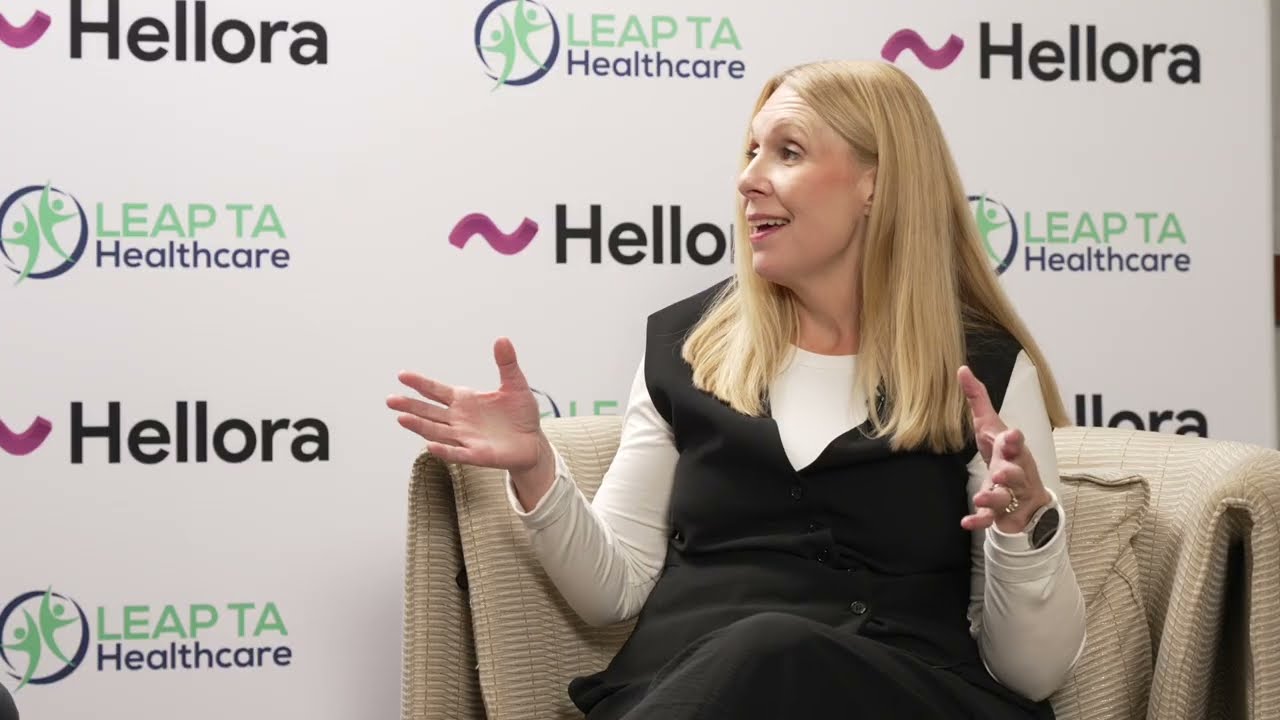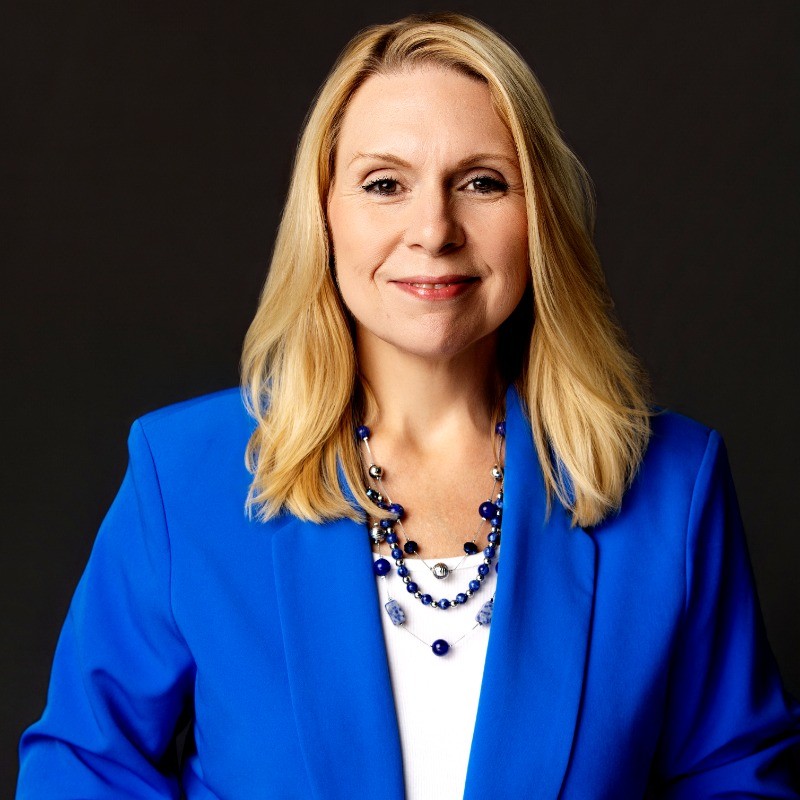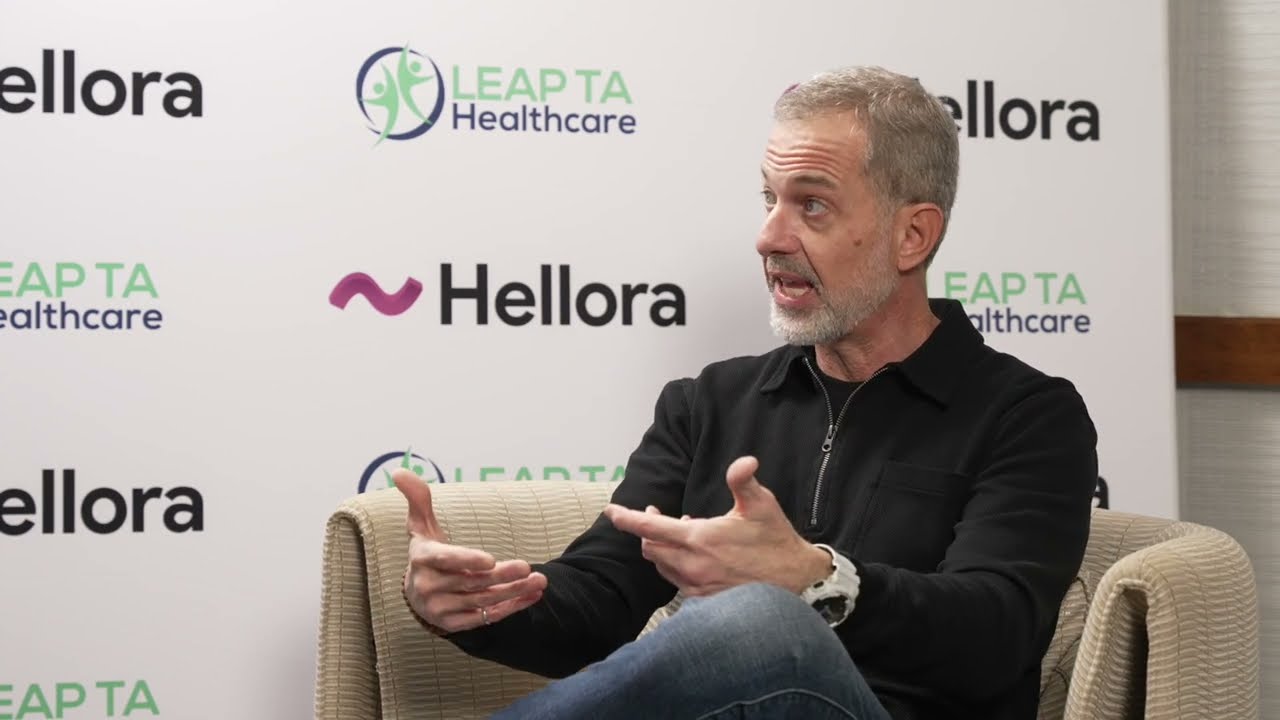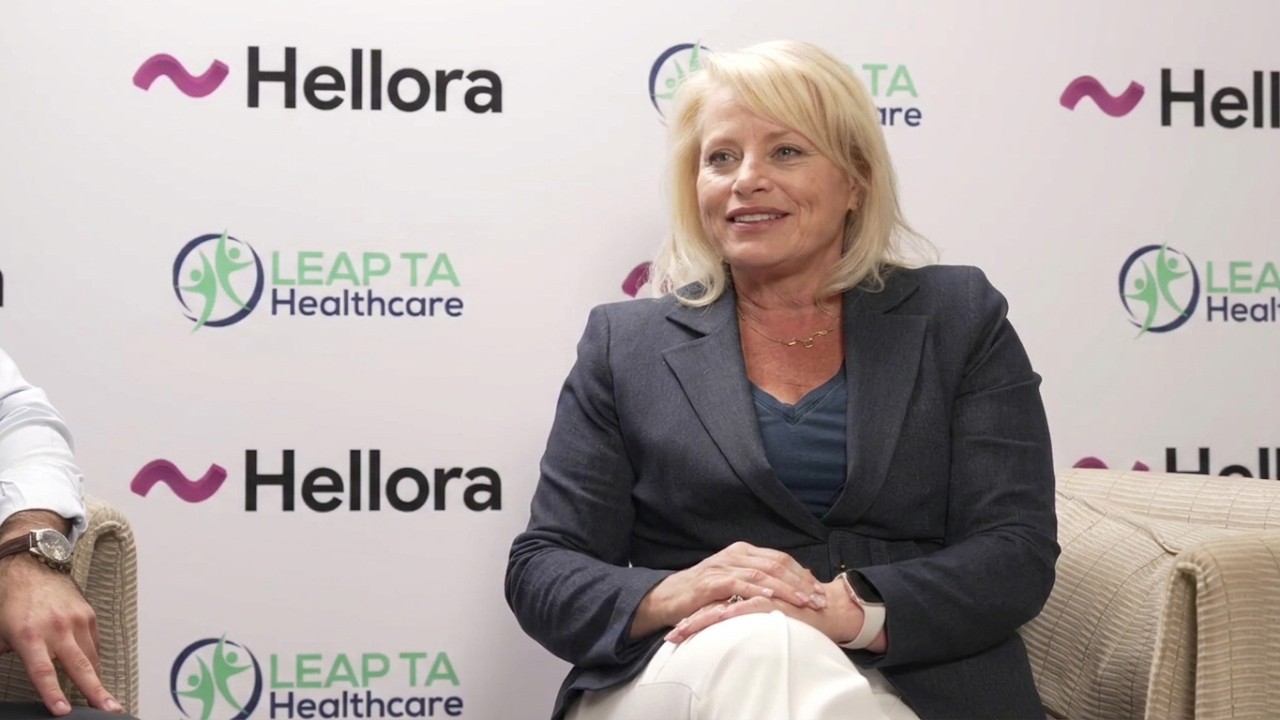
Tawfiq: Hi everyone, I'm Tawfiq, co-founder and CEO here at Hellora. We're at the LEAP TA Healthcare Conference, and I'm with Deb Andrychuk from Joveo. Deb, thank you for joining us.
Deb: Thank you for having me. I really appreciate it.
Tawfiq: Deb, tell us about your journey. You were a practitioner and moved to the vendor side?
Deb: Practitioner and then vendor side, yes.
Deb: It's kind of a funny journey. Monster.com is really what got me into the work I do today. I went there, learned all about recruiting and employer brand, and fell in love with TA. When I left Monster in 2008, it was to start a recruitment marketing and employer brand agency called the Arland Group. So much fun. We were a tiny boutique agency, but we were fortunate to have great accounts like American Airlines, Nationwide Insurance, Brinks, and DSW. I didn't realize at the time how special that was. And those customers were great about giving us feedback and helping us shape the next round of strategy.
That journey led me to Joe Shaker. Joe and I were friends for years, which I know people think is weird, since we competed, but we were always besties. When we realized we didn't have the programmatic support we needed, which is funny since I now work for Joveo, we went to Joe and asked how we could work together, and Shaker ended up buying Arland. That gave me exposure to more accounts, and the more accounts you get to know intimately, the more it helps you with others.
I'm a firm believer that you should never hire people only from your own industry. You're limiting yourself. When you bring in people from other industries, you can look at the strategies they used and apply them yourself. That's my little side rant.
Deb: While I was at Shaker, I onboarded Lowe's, and Rob Doherty was my leader there. He'd been my client five times and kept taking me with him, and he asked me to come work for Lowe's. I became head of talent attraction. I had a team of about 90, our TA team was over 500 people, and it was during COVID. We were an essential employer, and it was absolutely bonkers. It was taking us two and a half weeks to get someone scheduled for an interview. We were not moving fast enough.
Having to think through how to create efficiencies and take out all the friction is what led me to Joveo. I fell in love with the technology after seeing how much it changed our situation. We went from not being able to fill roles to every store being staffed, which you have to do as an essential employer. We hired about 325,000 people in 2021.
Tawfiq: Wow. That was at Lowe's during COVID?
Deb: Yes. It was insane, but there were great learnings. The biggest was that you have to be nimble and keep an open mind. Sometimes you go in thinking a strategy will work, you can see from the beginning that it won't, and you have to figure out where to go next. The other was being empathetic and understanding where everyone was coming from. Everyone was stressed out, and a lot of vendors were wondering whether they'd even survive. I definitely drew that from the experience.
Deb: Then I was recruited from Lowe's to Sony Interactive Entertainment, which is PlayStation, and I was there for over three years. That experience taught me patience. It helped me understand the client side, the pressure clients go through, and how hard it can be to get something approved. It's given me a whole new appreciation now that I'm back on the vendor side of the desk. If you have practitioner experience, it changes everything, because you actually experience the output of these tools. You're not trying to visualize it in your head. You live it every day and see the impact.
Deb: The number one thing I wish everybody would learn is that the volume game is over.
Tawfiq: Tell us more about that.
Deb: For years we've been after our vendors: give me more, give me more resumes. You don't need more. You need a more efficient process. You need to pull the candidate in and hang on to them. That's why I love chat. Conversational AI is the greatest thing ever invented, because it lets you screen high volume and provide a better experience at the same time.
And for niche roles, those people aren't waiting around for us to call them. They're on the sofa at night scrolling through TikTok or whatever. What better way to engage someone than to get them to your career site and immediately pull them into a conversation, instead of hoping they'll come back between 8 and 5? People are dabbling, and I don't call it looking because it really isn't, on weekends and at night. So we have to be able to answer questions and give them the information that differentiates us through chat, hold on to that person, get them scheduled, and hopefully hire them.
Tawfiq: I like that point: you don't need more applications. In fact, a flood of applicants creates another problem, because now you need a way to screen them all. I often tell clients to look first at talent that's already applied to them in the past. At Lowe's, you probably had a database of over a million people.
Deb: A huge database. That's when I learned you don't need more. You already have these people. You've already paid for them multiple times. You need to re-engage them, nurture them, and give them a reason to come back. The huge miss is that a lot of teams just send the same drip campaigns everybody else does. It's not going to work. You have to personalize it and make it about that person's journey, not the collective. Tools like yours give you the opportunity to do that.
At Lowe's, we had a large team doing CRM scrubbing and outreach. They were like junior sourcers, and it totally worked. These people already know you and engaged with you once. Maybe they didn't have the skills the first time and now they do for a different role, or it was a timing thing. I truly believe it works, but only if you personalize, and that's hard to do at scale.
Tawfiq: Programmatic advertising is something you're an expert in. How would you explain it simply to someone who doesn't know what it is?
Deb: I liken it to investing. If you put all your dollars into one company, that only gets you so far. If you want real return, you diversify. Programmatic is the same. Most employers lean on the big boys, like Indeed, LinkedIn, and ZipRecruiter. But everybody in this business buys from everyone. When a job board can't deliver the right return on a search, it partners with other sites. So by reaching candidates on those other boards directly, we can capture them at a lower cost per click. It behooves you to diversify across thousands of boards if necessary.
It also creates efficiencies. Our programmatic is built on AI, so it gets smarter and learns from our other clients, and we have data going back to 2017. We know where to post, when to post, what day, and what time. And our chat, screening, and scheduling platform works so well because all of that data is connected. It's not point solutions stitched together. It's purpose-built. Typically, when a client comes to us from another vendor, we see a 25 to 40% increase in efficiency, which translates to lower spend.
Tawfiq: So instead of putting my money into one or two stocks, I give it to an expert who knows what works and splits my 10 bucks across 20 stocks based on my criteria.
Deb: Exactly. And because the system is learning, you can stop the spend once you hit the point of no return, instead of throwing good money after bad. You can put a lot of controls in place, and we work with clients to understand their funnel metrics and model them. It makes a huge difference.
Tawfiq: Last question. You were a practitioner, and now you're on the vendor side. What's one thing you wish practitioners did more when evaluating vendors?
Deb: I wish every leader would listen to this: go apply to your own jobs. Put yourself in your candidate's shoes. Look at your assets and your career site. If you don't, you'll never understand what needs to change in your candidate experience. That's my TED talk for today.
Tawfiq: I love that. Deb, thank you for joining us. It's been a pleasure.
Deb: Thank you.