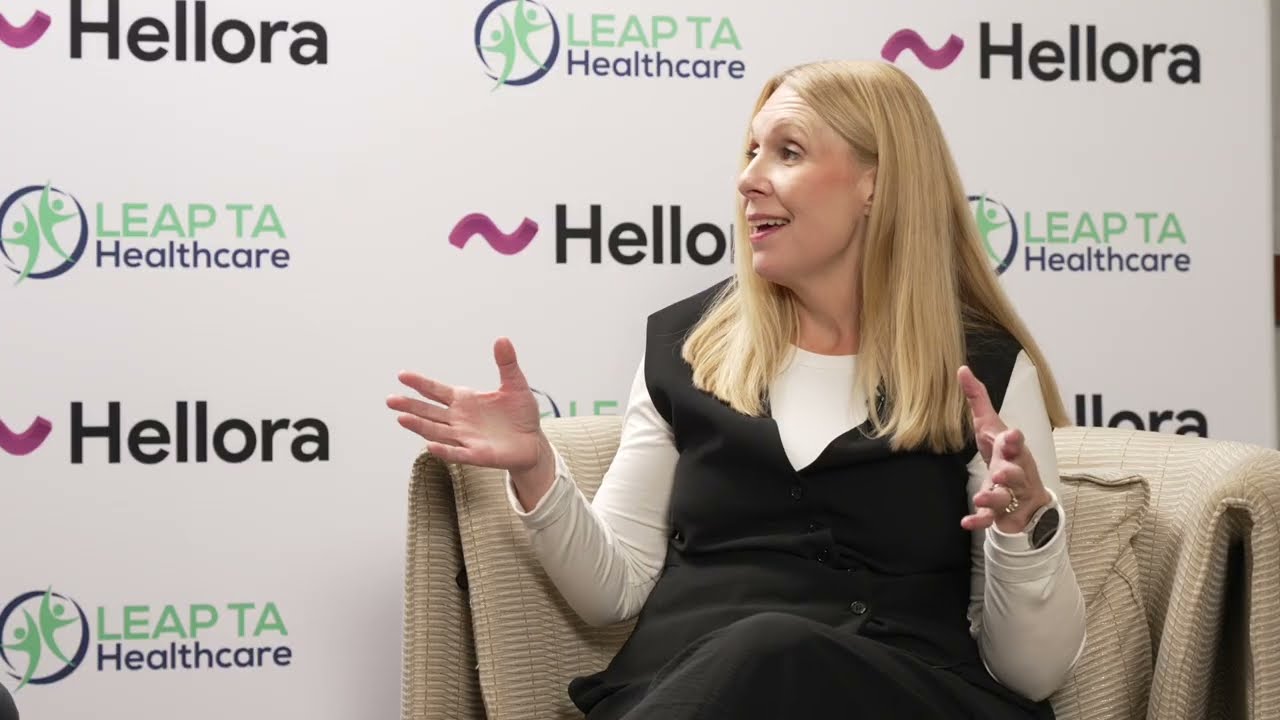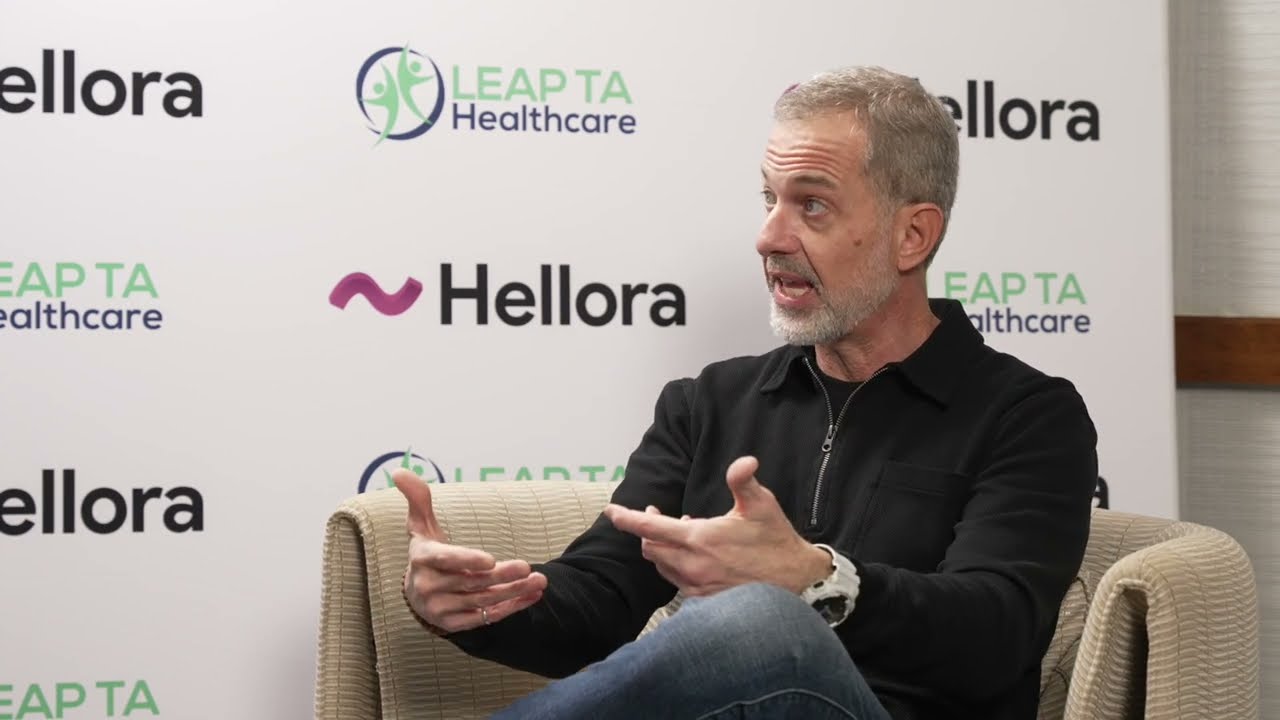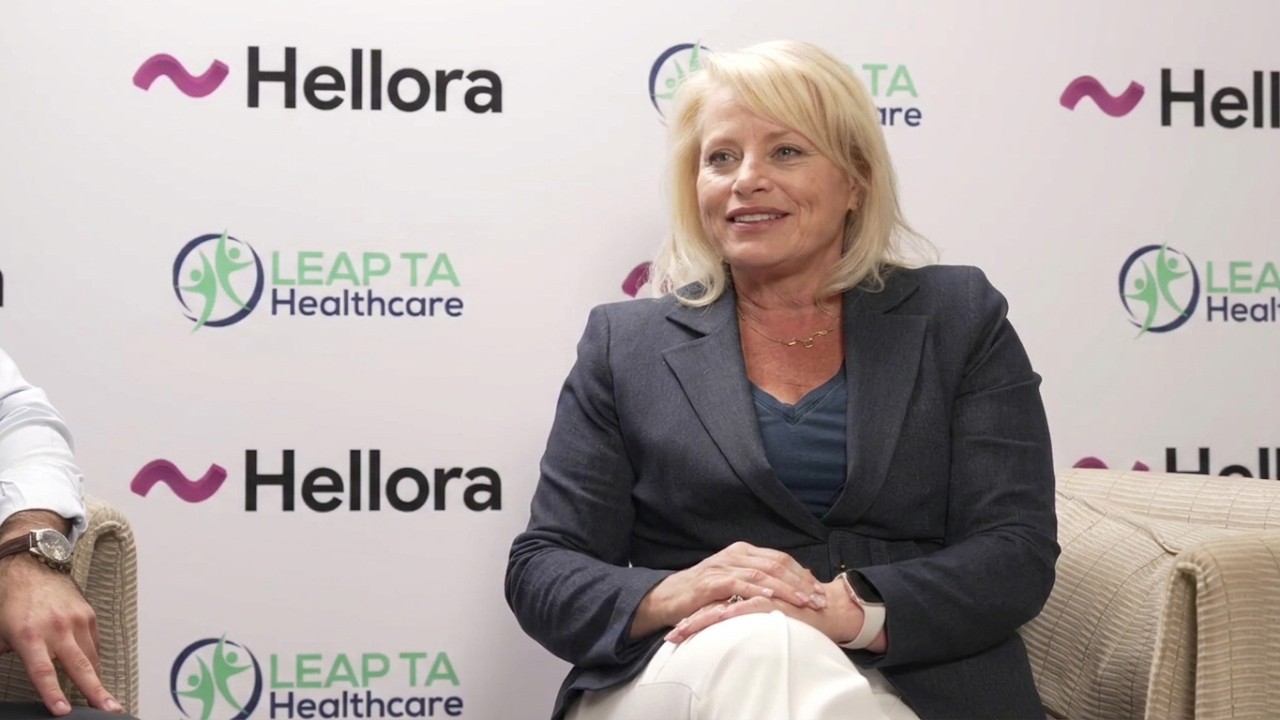
Tawfiq: Hi everyone, I'm Tawfiq, co-founder and CEO at Hellora. We're here at the LEAP TA Healthcare Conference, and I'm with Yvette Hansen from Penn Medicine. Yvette, thank you for joining us.
Yvette: Thank you so much for having me. I appreciate being here.
Tawfiq: The pleasure is all ours. Yvette, you're leading a session about proving TA's ROI to the C-suite. Tell us more about that.
Yvette: I'm facilitating conversations around that topic because I've had the opportunity to do it many times throughout my career: helping the C-suite understand the needs of talent acquisition and how they affect business outcomes, and making sure that what we do in talent acquisition always affects those outcomes. That really speaks to leaders.
Tawfiq: Why is it so important to connect TA initiatives and outcomes to C-suite initiatives?
Yvette: Because they know what their business goals are. High-quality patient care. Reducing time to fill and vacancy rates. That's all talent acquisition. But from a business perspective, they're saying, we need to make sure our patients get high-quality care, our floors are staffed, emergency medicine is taken care of, housekeeping is taken care of. So we have to make sure their business goals translate into what we do, and that what we do translates into those goals. Then they understand we're not just looking at a vacancy rate number. We're looking at how it affects your floor and your patient care. That resonates more with the business.
Tawfiq: Do you walk backwards as a TA leader, looking at their initiatives and showing how your work helps? Or are you part of the discussion as they shape their goals?
Yvette: We're really fortunate at Penn Medicine. We have a fantastic CHRO who has a seat at the table, so we don't have to walk backwards. We walk alongside them as they design their business goals, so we can layer in our own. Whether it's elevating talent acquisition, improving a process, or implementing technology, it's all in an effort to meet the goals as they're being designed.
Tawfiq: You joined Penn Medicine 10 months ago. Congratulations. Coming in, what were the first things you focused on?
Yvette: Thank you. First, the talent acquisition model. What once worked beautifully, the organization had outgrown, and that was one of the first things they wanted me to look at with some of the other TA leaders: recognizing that we'd outgrown the existing model, figuring out how to elevate it, and building trust with the business during that transition. The second was technology. Our technology was a little antiquated, and we wanted to meet candidates where they are. Our technology wasn't going to let us do that.
Tawfiq: It can be hard to come into an organization and say we need new technology, because it costs money. Why do you think TA leaders often fail to get a yes, and struggle to tie requests to C-suite initiatives?
Yvette: One of the presentations earlier said it nicely: if you can't connect the money to the outcome, you'll struggle to get a C-suite executive to follow your path. You have to connect the return on investment. Sometimes TA leaders forget that. They think, this will improve time to fill, vacancy rates, or quality of hire. But what does that mean for budget dollars? Is it going to cost money before we see a return? How long before we see it? Some TA leaders forget the finance piece and how to connect those dots, and as we continue to elevate talent acquisition's impact, we need to be doing that.
Tawfiq: So that's where most TA leaders fail: they haven't done the work to show how something saves money, improves efficiency, or moves wasted dollars?
Yvette: I absolutely think that's where TA leaders are unfortunately failing. They're not connecting the dots. Somebody referred to one of our speakers as a CFO whisperer. I think we all have to become CFO whisperers and get better at speaking finance within our organizations.
Tawfiq: There's a lot happening in healthcare across the country: cuts to Medicaid and Medicare, and talent shortages. Where do we go from here in 2027? What's a priority for you?
Yvette: Going into the new year, we're focusing on workforce development, building our own. That was also talked about here at the LEAP conference: you don't want multiple fishing lines in the same pond. I've seen that happening, and a lot of my peers are seeing it too. So we're working out what workforce development looks like for us: where we can invest in upskilling our current talent, and how we invest in the educational systems that produce the talent we need to recruit.
Tawfiq: Another speaker told me, we want to be a talent maker, not a talent taker.
Yvette: That's the person who talked about the fishing lines!
Tawfiq: Great analogies from that speaker. So you're adding to the workforce through educational pipelines. Tell us more.
Yvette: We have a wonderful leader running workforce development. He partners not just with schools and universities but also with associations and social and community organizations to develop pathways into different roles across the organization. It doesn't always have to be a nursing role. It could be any role in the hospital that eventually feeds into nursing. So he's starting from the very beginning.
You always hear about allied roles like rad techs and recruiting students from those programs. But he thinks much more broadly, which I think is brilliant. He asks: before they're a rad tech, what could they be, and how do I recruit them? Do I recruit them out of high school? Where do I get grant funding to offset some of the cost? We'll cover some of it, but offsetting it means we can bring in even more talent. Sean, I think you're fantastic. He's going to do some really exciting work in the next couple of years.
Tawfiq: How important is it to have the right leaders behind you as you think about new ways to attract talent?
Yvette: It's beyond vital. You need leaders who understand not only today's needs but can foresee the needs we'll have in the next year or two, so we can start building toward them. Somebody pointed out to me earlier that for years everyone talked about the nursing and physician shortages. That's being addressed, and nursing vacancy rates are coming down. But now allied roles are hitting hard, and nobody knows where to find tech-related talent, like all the imaging roles. We need to address that, but we also need to think about next year and the year after. Otherwise we're always chasing that carrot.
Tawfiq: Always reactive, not proactive.
Yvette: Yes. We are reacting to something, but while we react, let's think proactively about what's coming down the pike, and start pipelining and building that talent population.
Tawfiq: Last question. What's one piece of advice you'd give TA leaders, especially those who've recently switched organizations?
Yvette: Share your talents. Come to these kinds of conferences, and don't be afraid to share what you're doing. And take what other people are doing with a grain of salt. Not everything they share is something you'll be able to deploy. Somebody compared it to a demo: it looks fantastic, but you can't always do it exactly as you saw it. The same applies when a peer shares something. Not everything they did will work in your organization, but I guarantee there are little pockets you can take and implement. I took so many notes and thought, I can't do it all, but I can take that piece and implement it here.
Tawfiq: Yvette, thank you for joining us and sharing all this insight. It's been a pleasure.
Yvette: Thank you. It's always a pleasure hanging out with you.